As your insurance broker, I’ve seen countless business owners make the same mistake year after year: they focus solely on getting the lowest premium rates while completely ignoring their employee retention rates. Here’s the reality check you need:
your retention rate matters far more than your premium rate when it comes to building a successful, profitable business.
When you keep your employees happy and covered, you’re not just saving money on benefits administration. You’re building something much more valuable: a foundation of trust, loyalty, and long-term success that premium shopping simply can’t provide.
The Hidden Costs of High Employee Turnover
Let’s talk numbers, because I know that’s what drives your decision-making.
Replacing a single employee can cost anywhere from 50% to 200% of their annual salary. That’s not just the recruiting and training costs: it’s the lost productivity, the knowledge that walks out the door, and the impact on team morale.

When you focus purely on cutting premium costs, you might think you’re saving money. But if those cheaper benefits packages lead to employee dissatisfaction and higher turnover, you’re actually bleeding money in ways that don’t show up on your monthly insurance bill.
I’ve worked with companies that saved $200 per employee per month on premiums, only to spend $15,000 replacing each employee who left because they were unhappy with their benefits package. The math just doesn’t add up.
High retention rates mean your people stay protected year after year, building real trust and lasting peace of mind. This isn’t just feel-good rhetoric: it’s a business strategy that impacts your bottom line in measurable ways.
Why Retention Builds Unshakeable Business Value
When your employees stick around, magic happens. They become more productive, more invested in your success, and more likely to go above and beyond for your customers.
A 5% improvement in employee retention over five years can double your company’s profit: that’s a statistic that should grab every business owner’s attention.
Think about it from your employees’ perspective. When they know you’ve invested in quality benefits that actually meet their needs, they feel valued. They tell their families and friends about how much they love working for you. They recommend talented people they know for open positions. They become your biggest advocates.
 Premium rates are part of the puzzle, but keeping your employees happy and covered offers bigger value in the long run.
 This is where many business owners get it wrong: they see benefits as a cost center instead of a retention and recruitment tool.
The Premium Rate Trap: Why Cheaper Isn’t Always Better
I get it. When you’re looking at two benefits proposals and one is significantly cheaper, your instinct is to go with the lower-cost option. But here’s what I’ve learned after years in this business:
the cheapest premium often comes with the highest hidden costs.
Lower premium rates usually mean one or more of these compromises:
- Higher deductibles that frustrate employees
- Limited provider networks that force employees to change doctors
- Reduced coverage that leaves gaps in protection
- Poor customer service that creates headaches for your HR team
- Complex claims processes that waste time and create stress
When employees encounter these problems, they don’t just get frustrated with their insurance company: they get frustrated with you as their employer. And frustrated employees don’t stick around.
Building Long-Term Loyalty Through Strategic Benefits Planning
Focus on relationships, not just numbers. This is the mindset shift that separates successful businesses from those constantly struggling with turnover and recruitment challenges.
When I work with clients on benefits planning, we look at the complete picture:
Employee Demographics and Needs: Are you hiring young professionals who prioritize mental health benefits and student loan assistance? Or are you attracting families who need comprehensive medical coverage and dependent care options?
Industry Competition: What are other companies in your space offering? You don’t need to have the most expensive benefits package, but you need to be competitive in the areas that matter most to your workforce.
Long-Term Business Goals: Are you planning to grow? Preparing for a sale? Building a company culture that supports remote work? Your benefits strategy should align with these objectives.
 Company Culture and Values:
 If you talk about work-life balance but offer benefits that don’t support it, employees notice the disconnect. Your benefits package should reinforce the culture you’re trying to build.
The Compounding Returns of High Retention
Here’s where retention really starts to pay dividends.
Retaining existing employees costs 5 to 25 times less than acquiring new ones. But the savings go far beyond recruitment costs.
Long-term employees:
- Require less supervision and training
- Have deeper institutional knowledge
- Build stronger relationships with customers
- Mentor and train newer team members
- Contribute to a stable, productive work environment
High retention rates also indicate satisfied customers (in this case, your employees), leading to stable revenue, reduced operational chaos, and growth through employee referrals. When your team is happy, they naturally become recruiters for your business.
I’ve seen companies transform their entire business trajectory by shifting focus from premium costs to retention value. One client went from 40% annual turnover to 12% turnover in just two years by investing in better benefits. Their productivity increased, their reputation in the industry improved, and their profit margins grew substantially.
Practical Steps to Improve Your Retention Rate
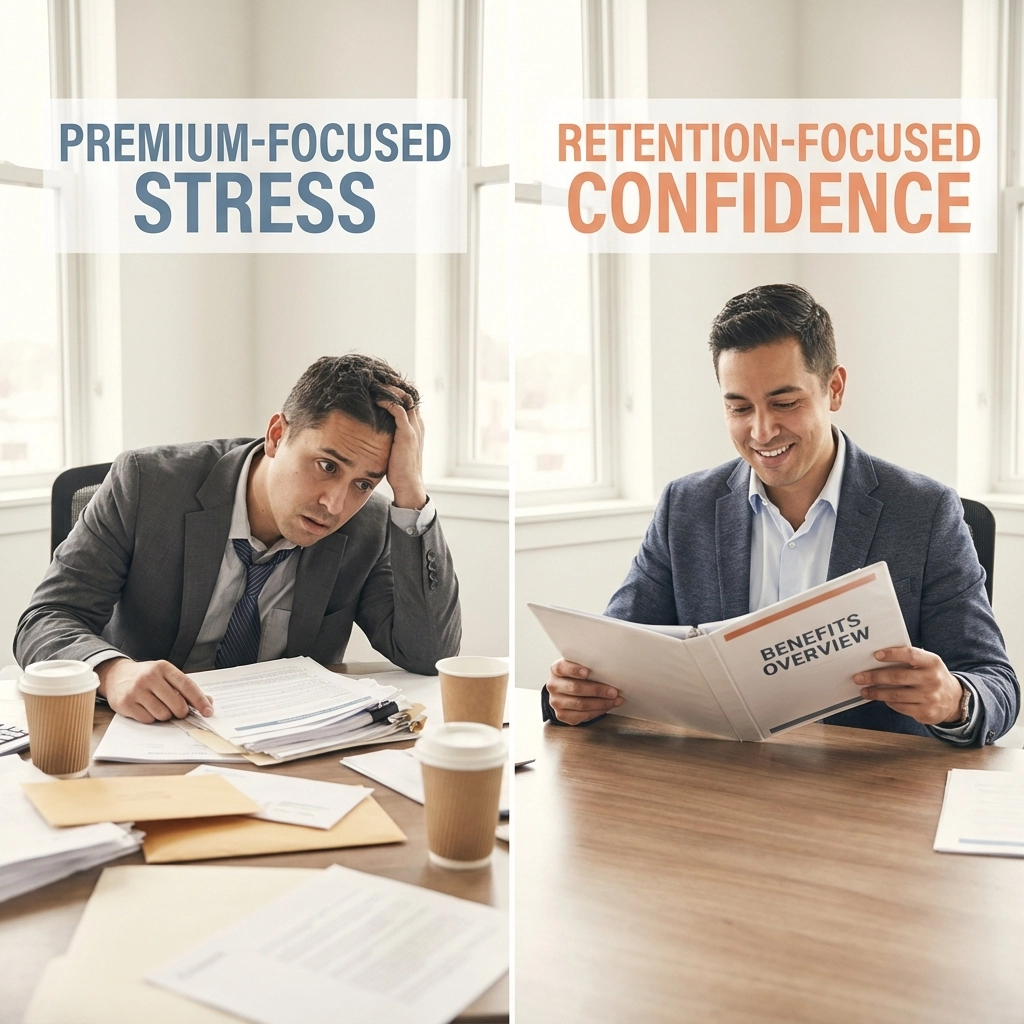
Ready to make the shift from premium-focused to retention-focused benefits planning? Here’s how we can get started:
Conduct an Employee Benefits Survey: Find out what your team actually values. You might be surprised: sometimes it’s not the most expensive benefits that matter most, but the ones that solve real problems in your employees’ lives.
 Review Your Current Turnover Patterns:
 When employees leave, are benefits mentioned in exit interviews? Are you losing people to competitors offering better packages? This data helps us identify specific areas for improvement.
Calculate Your True Cost of Turnover: Add up recruitment costs, training time, lost productivity, and the impact on team morale. This gives us a clear budget for retention-focused benefits improvements.
Design a Benefits Package Around Retention: Instead of starting with budget constraints, we start with retention goals and work backward to create a package that keeps your best people engaged.
Communicate Value Effectively: Many employees don’t fully understand the value of their benefits package. We help you create communication strategies that ensure your team appreciates what you’re providing.
Looking Beyond This Year’s Premium Rates
Want to keep your team engaged and supported? The answer isn’t necessarily spending more money: it’s about spending money more strategically. When you invest in benefits that truly meet your employees’ needs, you create a competitive advantage that goes far beyond any short-term premium savings.
I’ve worked with hundreds of businesses over the years, and the pattern is always the same: companies that prioritize employee retention through thoughtful benefits planning consistently outperform those that chase the lowest premium rates.
Your employees are your most valuable asset. The benefits you provide aren’t just a business expense: they’re an investment in the people who make your business successful. When you get this right, everything else becomes easier: recruiting, productivity, customer satisfaction, and yes, even profitability.
 Ready to make the shift from premium-focused to retention-focused benefits planning?
 Let’s start a conversation about how we can design a benefits package that keeps your best people engaged, attracts top talent, and supports your long-term business goals.
Contact me at
info@seidenbenefits.com or visit
seidenbenefits.com to schedule a consultation. Together, we’ll create a benefits strategy that builds the foundation for sustained growth and success.